

Play Therapy for Children in Bentonville, AR
Children communicate through play the way adults communicate through words. Our trained play therapists help children ages 3-12 express emotions, process experiences, and build resilience in a safe, nurturing environment.
Play therapy is the most developmentally appropriate form of therapy for young children. Research shows it is effective for a wide range of childhood challenges including anxiety, behavioral issues, trauma, grief, and social difficulties (Ray et al., 2015; James et al., 2020, Cochrane Database of Systematic Reviews). Our therapists are trained in child-centered and directive play therapy techniques.
Ready to Schedule Your First Session?
Free 15-minute consultation · Same-week appointments · Most insurance accepted
How Play Therapy Helps
Through carefully selected toys and therapeutic techniques, children work through challenges they may not have words to express.
Emotional Expression
Children use toys, art, and sand to express feelings they can't verbalize, processing complex emotions through metaphor and symbolic play.
Behavioral Growth
Play therapy helps children develop self-regulation, impulse control, and problem-solving skills in a natural, pressure-free environment (Bratton et al., 2005, Clinical Psychology Review).
Trauma Processing
Through therapeutic play, children safely revisit and process difficult experiences at their own pace, building mastery over overwhelming events.
Social Skills Development
Children practice sharing, turn-taking, empathy, and communication through guided interactive play with the therapist.
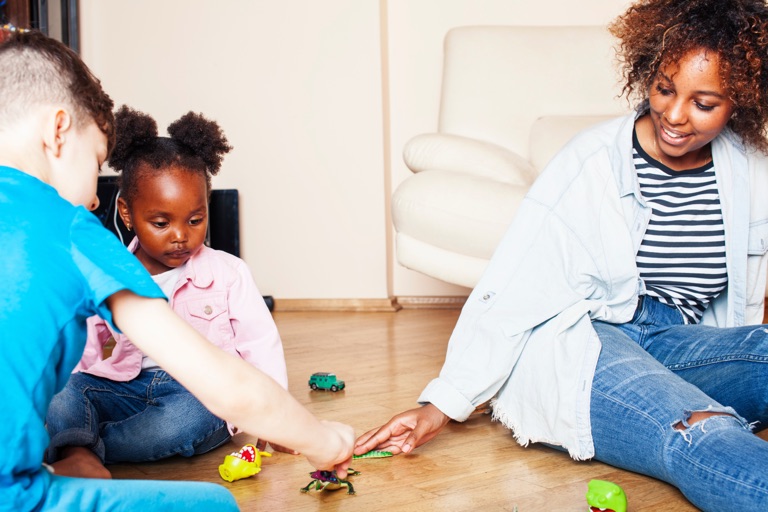
Why Play Therapy Works
Play is children's natural language. When words aren't enough, play therapy bridges the gap between a child's inner world and the healing they need.
Ready to take the next step? Free 15-minute consultation — no commitment required.
Book Free Consultation → Call (479) 259-1390Your Child's Play Therapy Journey
A thoughtful, structured process designed to meet your child exactly where they are.
Parent Consultation
Meet with the therapist (without your child) to discuss concerns, developmental history, and goals.
Weekly Sessions (45 min)
Your child works one-on-one with their therapist in our specially designed playroom.
Parent Updates & Progress
Regular parent check-ins every 4-6 sessions to discuss progress and adjust the treatment plan.

Where Play Becomes Healing
Children communicate through play the way adults communicate through words. Our play therapists create a safe, nurturing environment where children can express feelings, process experiences, and develop coping skills — all through the natural language of play.
Recommended Reading
What Play Therapy Is & Who It Helps
Play therapy is a developmentally attuned form of counseling for children, generally ages 3 to 12, that uses play as the primary way a child communicates and works through difficulty. Young children rarely have the abstract vocabulary to "talk out" what is troubling them; instead they reveal their inner world through dollhouses, sand trays, art, puppets, and pretend scenarios. A trained child therapist follows that play, reflects what the child expresses, and gently helps the child build mastery over worries, big feelings, and confusing experiences. At ZipHealthy, this is delivered by our licensed clinicians in downtown Bentonville — it is therapeutic, psychosocial support that complements any medical care you receive.
Families often reach out when a child shows changes that feel hard to manage at home or school: persistent worry or fearfulness, frequent meltdowns or anger, withdrawal, regression (such as new bedwetting or clinginess), trouble after a divorce, a move, a new sibling, a death in the family, or a frightening event. Play therapy is also commonly used to support children navigating grief and loss, family stress, social difficulties, and adjustment challenges. The American Psychological Association offers accessible background on children's mental health and developmentally appropriate care at apa.org/topics/children.
Play therapy is not a fit for every situation, and it is never a substitute for medical evaluation. If a child shows signs that may benefit from a medical or developmental work-up — or if a question of medication ever arises — we coordinate with the family's pediatrician or primary care provider rather than offering medical advice ourselves. Our role is the counseling piece, in partnership with the people already caring for your child.
What to Expect — Your First Session & How It Works
The first appointment is usually a parent or caregiver consultation without the child present. This gives you space to speak candidly about your concerns, your child's developmental and family history, and what you hope changes. Together we clarify goals and decide whether play therapy is the right starting point. From there, your child typically attends weekly individual sessions of about 45 minutes in our playroom, which is stocked with toys and materials chosen specifically to support emotional expression and skill-building.
Early sessions focus on building safety and trust — your child gets to know the therapist and the room at their own pace. As comfort grows, the therapist follows themes that emerge in the child's play, helping them name feelings, rehearse coping, and resolve the things they are working through. You stay closely involved: we schedule caregiver check-ins roughly every four to six sessions to review progress, answer questions, and share simple strategies you can use at home. Length of care varies with each child's needs and goals; some families notice meaningful shifts within a few weeks, while others benefit from longer support.
What you share with us is protected health information and is kept confidential under HIPAA, with the standard, limited exceptions required by law (for example, concerns about a child's safety, which we are legally obligated to act on as mandated reporters). We will walk you through exactly how confidentiality works for a minor at the start of care.
Our Approach
We use evidence-informed play therapy methods matched to each child and family. Child-centered play therapy — a non-directive approach in which the therapist follows the child's lead and provides a consistent, accepting relationship — is a foundation of our work. When goals call for more structured skill-building, the therapist may weave in directive techniques, expressive arts, sand tray work, and concrete coping practice. For families, we draw on filial and parent-involvement strategies so the gains made in session carry into daily life.
A meta-analysis of play therapy outcomes reported moderate to high treatment effects across a range of presenting concerns (Bratton et al., 2005, Clinical Psychology Review), and subsequent reviews have continued to support child-centered approaches for childhood emotional and behavioral difficulties (Ray et al., 2015, Journal of Counseling & Development). For general, non-commercial guidance on children's emotional health and when to seek support, the National Institute of Mental Health maintains resources at nimh.nih.gov. We share these so you can read the science yourself; outcomes always depend on the individual child, and we make no promises of specific results.
For older children, teens, or whole-family concerns, play therapy is sometimes one piece of a broader plan. We may suggest pairing it with individual therapy for an older sibling or caregiver, or family sessions, depending on what would help most.
Format & Logistics
Play therapy with young children is most effective in person, in our purpose-built playroom at 240 S Main Street, Suite #270 in downtown Bentonville, where the full range of therapeutic materials is available. For parent consultations, caregiver check-ins, and work with older children or teens, secure telehealth across Arkansas is also an option, which can ease scheduling for busy families and those farther from Bentonville.
ZipHealthy works with most major insurance plans and is a Blue Cross Blue Shield preferred provider. A sliding-scale option may be available for families who qualify, and we are glad to talk through cost transparently before you commit. You can review typical fees and how billing works on our pricing and what-to-expect and therapy cost in Arkansas pages.
If you do not bill insurance, federal law entitles you to a Good Faith Estimate of expected costs under the No Surprises Act — we provide this in writing so there are no surprises. The simplest way to begin is a free 15-minute consultation: book online or call (479) 259-1390.
Support your child's journey...
Anxiety Management Toolkit
Grounding exercises, coping strategy cards, guided audio track, and clinician-designed worksheets. Helpful for parents supporting a child in play therapy.
Get the Toolkit — $34.99Instant PDF download · Designed by our licensed clinicians
For educational and personal development purposes. Not a substitute for professional therapy.
Give Your Child the Gift of Healing Through Play
Every child deserves to be heard. Schedule a parent consultation to learn how play therapy can help your child thrive.
Ready to Take the Next Step?
Free 15-minute consultation · Same-week appointments · Most insurance accepted
Ready to Take the Next Step?
Schedule your free 15-minute consultation — no commitment, no pressure.