

PSS-10 Stress Self-Assessment
A free, confidential screening tool to help you understand your perceived stress levels.
About This Assessment
The PSS-10 (Perceived Stress Scale) is a widely-used psychological instrument developed by Dr. Sheldon Cohen for measuring the perception of stress. It assesses how unpredictable, uncontrollable, and overloaded you find your life. This questionnaire takes approximately 4-5 minutes to complete.
Instructions: In the last month, how often have you experienced the following? Select the answer that best describes your experience.
Your Results
Get Your Personalized Report
Receive a detailed PDF report with your results, personalized stress management strategies, and relaxation techniques delivered to your inbox.
Take the Next Step
Our licensed therapists can help you develop effective stress management techniques and address underlying causes. Schedule a free 15-minute consultation to discuss your results.
Book Your Free ConsultationImportant Notice & Disclaimer
Crisis Resources
If you are in crisis or experiencing overwhelming stress that feels unmanageable, please reach out for support:
This screening tool is for educational and informational purposes only. It is not intended to diagnose any mental health condition or replace professional evaluation.
The PSS-10 measures perceived stress, not clinical stress disorders. Your results should be discussed with a healthcare professional for proper interpretation and guidance.
Completing this assessment does not create a therapeutic or provider-patient relationship with ZipHealthy or its clinicians.
Your responses are processed entirely in your browser. No assessment data is stored on our servers or shared with third parties unless you choose to submit your email for a report.
ZipHealthy assumes no liability for actions taken based on assessment results. Always seek professional guidance for mental health concerns.

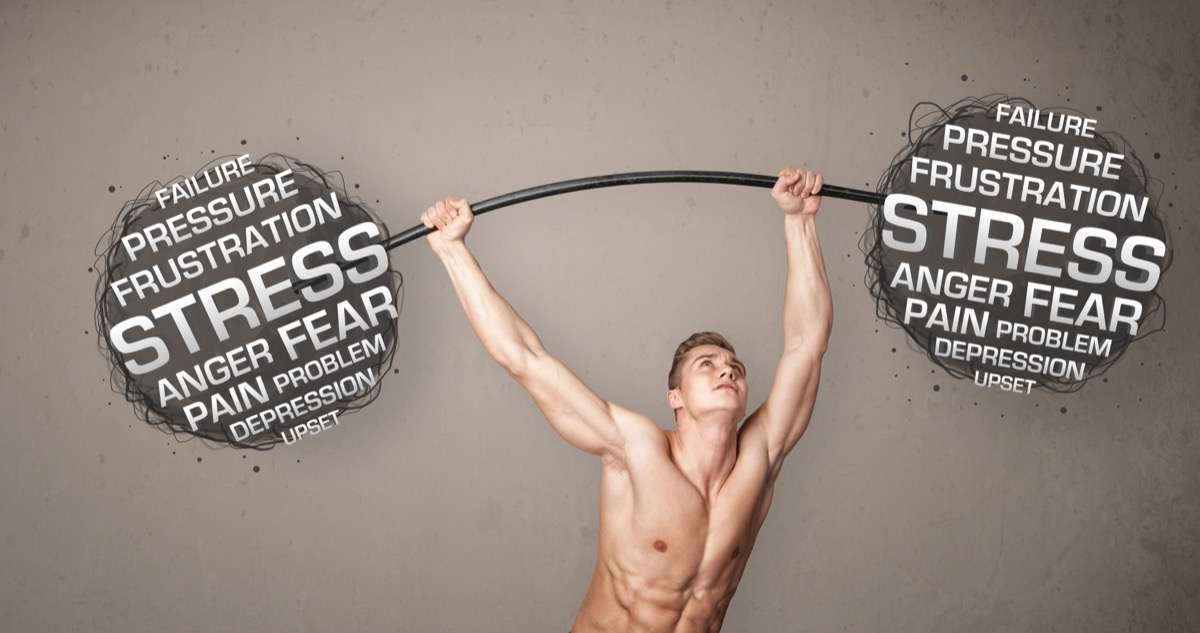
Measuring Your Stress Load
Understanding your stress levels is the first step toward building resilience and reclaiming your well-being.
Start managing stress today...
Stress Management Toolkit
Stress audit worksheet, progressive muscle relaxation guide, mindfulness exercises, and a burnout prevention checklist. Evidence-Informed tools to help you reclaim your calm.
Get the Toolkit — $24.99Instant PDF download · Designed by our licensed clinicians
For educational and personal development purposes. Not a substitute for professional therapy.
What This Stress Screener Measures
The questions you just answered are adapted from the Perceived Stress Scale (PSS-10), one of the most widely used self-report measures of psychological stress. What sets the PSS apart from a simple checklist of stressful events is that it does not ask how many difficult things happened to you. Instead, it asks how unpredictable, uncontrollable, and overloaded your life has felt over the past month. Two people can face the very same workload, parenting demands, or health worry and experience it completely differently — the PSS is built to capture that personal, subjective appraisal, which is often what matters most for how stress affects your mood, sleep, and body.
Because the scale looks back over roughly the last four weeks, your score reflects a recent window rather than a single hard day or a lifelong trait. That makes it useful as a snapshot you can repeat. Several of the items are written in a positive direction — asking how often you felt confident handling problems or felt that things were going your way — and these are reverse-scored. That design helps the screen pick up not only how much pressure you feel but also how much sense of control and coping you still have available, which is exactly the balance therapy aims to shift in your favor.
It is worth naming what this tool is not measuring. It is not a test for any specific diagnosis, and a high score does not mean something is wrong with you. Stress is a normal, adaptive response — your nervous system mobilizing to meet a demand. The screen simply helps you put a number on a feeling that is otherwise hard to describe, so you can notice patterns, track changes, and decide whether the load you are carrying is one you want support with. To learn how chronic stress overlaps with related concerns, the American Psychological Association maintains a helpful plain-language overview of stress at apa.org/topics/stress.
How to Understand Your Results
Your total falls somewhere on a 0–40 range, and it is most helpful when read in broad bands rather than as a precise grade. Lower scores generally suggest stress that feels manageable right now; mid-range scores suggest a meaningful load that is starting to tax your usual coping; and higher scores suggest you are feeling stretched in ways that are worth taking seriously. These bands are a starting point for reflection, not a verdict. A number on a screen cannot account for the context of your life — a grieving parent, a new clinician finishing residency, and a caregiver running on little sleep might all land in the same band for very different reasons.
This is a screen, not a diagnosis. A self-screen can flag that something deserves attention, but it cannot tell you why you feel the way you do or what would help most. Only a licensed clinician can make a diagnosis, and that always comes from a conversation — understanding your history, your circumstances, what you have already tried, and how stress is showing up in your sleep, relationships, focus, and body. If your result surprised you in either direction, that itself is useful information to bring to a first session. We treat assessment as an ongoing tool, not a one-time label: at ZipHealthy we often re-administer brief measures like this over the course of care so you and your therapist can see, in concrete terms, whether the strategies you are practicing are actually lightening the load.
It also helps to interpret your stress alongside related experiences. Persistent stress frequently travels with low mood, worry, or exhaustion, and the lines between them can blur. If your result felt high, you might find it clarifying to also complete our anxiety self-screen (GAD-7) or depression self-screen (PHQ-9). None of these screens diagnoses anything on its own — together they simply give a fuller picture you can talk through with a professional.
What to Do Next
Whatever your score, you do not have to figure out the next step alone. A good first move is a no-pressure conversation. ZipHealthy offers a free 15-minute consultation where you can describe what is weighing on you, ask questions, and get an honest sense of whether therapy is a fit — with no obligation to book further. You can schedule that consultation online or call our Bentonville office at (479) 259-1390.
When stress is the focus, several evidence-informed approaches tend to help, and the right one depends on what is driving things for you. Cognitive behavioral strategies target the thinking patterns that amplify pressure; mindfulness and relaxation training help calm an over-activated nervous system; and skills-based work builds practical tools for the moments when you feel flooded. Many people start with individual therapy for personalized, one-to-one support. Others find that learning alongside people facing similar pressures is powerful — our group therapy options and structured DBT skills group teach concrete emotion-regulation and distress-tolerance tools. If stress is showing up mostly as anxiety or low mood, our pages on anxiety treatment and depression therapy describe how we approach those. And when stress is rooted in past trauma that keeps getting reactivated, EMDR therapy may be appropriate.
If a clinical concern were ever to call for medication, that falls outside the scope of psychotherapy — we do not prescribe. Instead, we coordinate with your primary care provider or a prescriber so that any medical and therapeutic care work together. Practical concerns matter too. You can see our pricing and what to expect, review your right to a Good Faith Estimate of costs, or explore telehealth therapy available statewide in Arkansas if getting to an office is hard. You can also browse the full range of our behavioral health services to see what fits.
A Brief Safety Note
Sometimes stress stops feeling like pressure and starts feeling like more than you can bear. If at any point you are having thoughts of harming yourself, feel you cannot keep yourself safe, or are simply overwhelmed and need to talk to someone right now, please reach out. You can call or text 988 to reach the Suicide & Crisis Lifeline, free and confidential, 24 hours a day. You can also text HOME to 741741 for the Crisis Text Line, or call 911 in an emergency.
These lines are not just for the most severe moments — reaching out early is a sign of strength, not weakness. A self-screen like this one can never substitute for talking with a trained person, and contacting a crisis line does not commit you to anything. The U.S. Substance Abuse and Mental Health Services Administration also runs a confidential National Helpline at 1-800-662-4357; more information is available at samhsa.gov.
Ready to Take the Next Step?
Schedule your free 15-minute consultation — no commitment, no pressure.